
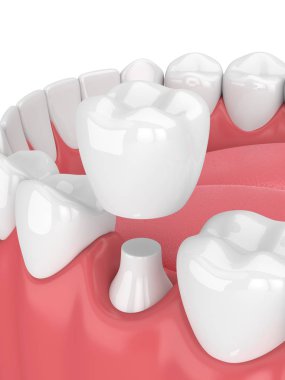
When a cavity grows large enough, a standard filling no longer has enough healthy tooth left to properly bond to and support. That’s usually the point where a crown becomes the better long-term option.
When a Filling Isn’t Enough Anymore
A filling works by replacing a small amount of lost tooth structure. Once decay or a fracture takes up too much of the tooth, the remaining structure can’t reliably hold a filling in place, and the tooth itself becomes more vulnerable to cracking under normal chewing pressure. A dental crown vs. a filling comes down to how much healthy tooth is actually left to work with.
What a Crown Does Differently
A crown covers the entire visible portion of the tooth above the gumline, essentially replacing the outer structure of the tooth rather than filling a cavity within it. This gives the tooth a layer of protection and strength that a filling, by design, isn’t built to provide on a tooth with this much damage.
Types of Crowns Available
Eggleston Dental Care offers porcelain, metal, porcelain-fused-to-metal, and all-ceramic crowns. Porcelain and all-ceramic options are generally chosen for visible teeth because they match natural tooth color, while metal and porcelain-fused-to-metal crowns are sometimes used on back teeth where strength under heavy chewing matters most.
What the Process Involves
The tooth is first reshaped to make room for the crown, and an impression is taken to create a precise fit. With the practice’s CEREC same-day crown technology, many crowns are designed, milled, and placed in a single visit. Cases that require a specialty lab may still need a temporary crown in place for a few weeks while the permanent restoration is fabricated.
How Long a Crown Typically Lasts
Lifespan depends heavily on the crown material and how well you care for it, but most crowns last well beyond a decade with consistent brushing, flossing, and regular dental visits.
What Affects the Cost
Material choice, the complexity of the case, and whether a specialty lab is needed all factor into price, along with how your dental insurance plan covers restorative work. The insurance and financing page covers how the practice helps patients plan for costs insurance doesn’t fully cover.
Possible Risks and Complications
Some patients experience temporary sensitivity after a crown is placed, which typically fades within a few weeks. Less commonly, a crown can loosen over time, and in rare cases patients have an allergic reaction to certain crown materials. Decay can still develop under a crown if the tooth wasn’t properly prepared or if oral hygiene lapses, which is why regular checkups matter even after a crown is placed.
Alternatives Worth Considering
For less extensive damage, inlays, onlays, or dental bonding may restore the tooth without the full coverage a crown provides. The right choice depends on exactly how much of the tooth’s structure is compromised, which is something Dr. Eggleston evaluates case by case rather than assuming the most involved option is always necessary.
Keeping Your Crown in Good Shape
Regular brushing, flossing, and checkups protect both the crown and the tooth underneath it. Avoiding excessive pressure from habits like chewing ice or grinding your teeth also helps a crown last as long as it’s designed to.
Who Performs This Treatment
Dr. Jim Eggleston evaluates each case individually to determine whether a crown, a smaller restoration, or another option is the right fit, factoring in how much of the tooth’s natural structure remains.
Ready to Protect Your Tooth?
Schedule an appointment with Eggleston Dental Care in Turlock, CA to find out whether a crown is the right next step for your tooth.