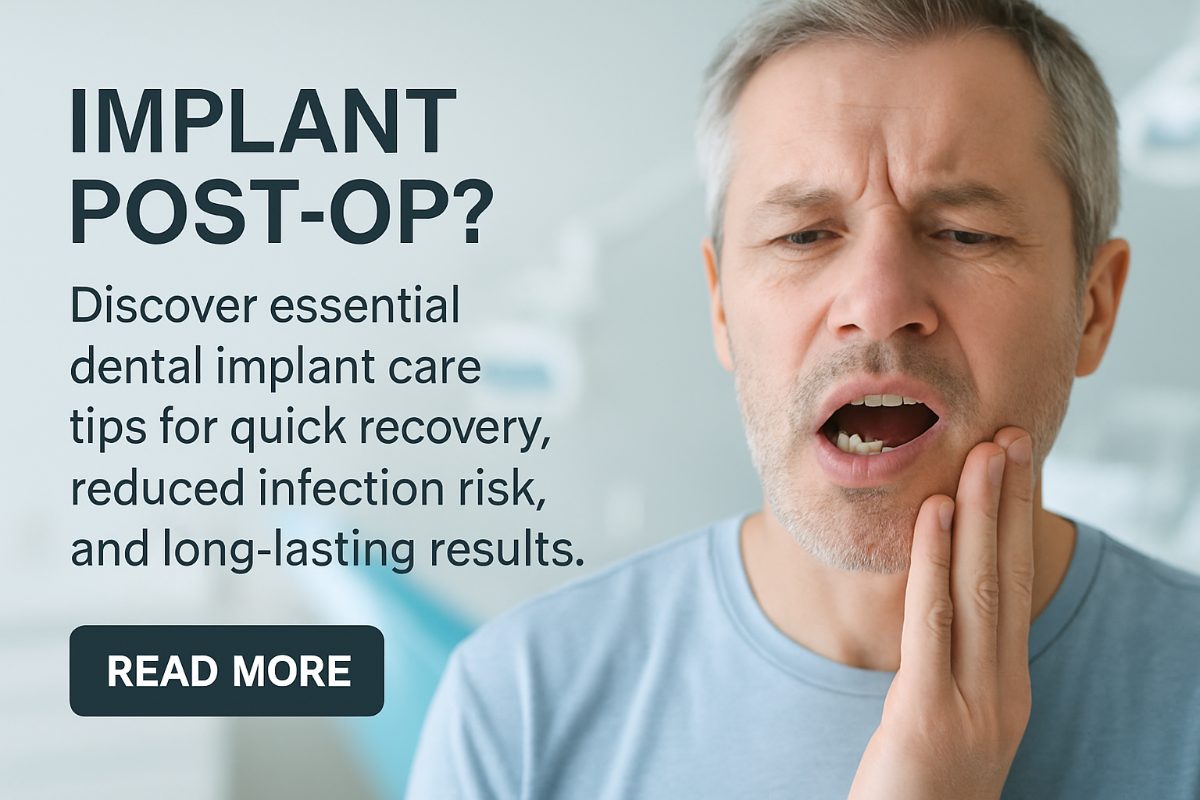
If you just had implant surgery or are planning for one, this guide covers practical steps for implant post op care and recovery. Good dental implant care matters for healing, lowering infection risk, and helping your implant last for years. These tips focus on common cases—always follow your surgeon’s specific instructions first.
What to Expect Right After Surgery (implant post op in Turlock, CA)
Normal symptoms
After implant surgery you can expect some bleeding, swelling, bruising, and numbness around the site. Bleeding is usually heaviest in the first 24 hours and tapers over 48–72 hours. Swelling and bruising commonly peak around day 2–3 and begin to improve by the end of the first week. Mild numbness or tingling may last days to weeks depending on the nerves involved.
What your immediate post-op instructions should include
- Rest and avoid strenuous activity for 48–72 hours.
- Use ice packs on the cheek for 15–20 minutes at a time during the first 24–48 hours to control swelling.
- Take prescribed pain meds and antibiotics exactly as directed.
- Keep your head elevated when lying down to reduce swelling and bleeding.
Day-by-Day implant post op Care Plan
First 24 hours
Control bleeding by biting gently on gauze for 30–60 minutes. Replace gauze as needed. Take pain medicine before discomfort becomes severe. Eat soft, cool foods like yogurt, smoothies, and mashed potatoes. Avoid hot beverages and spitting. Do not use a straw—suction can dislodge blood clots.
Days 2–7
Swelling often peaks around day 2 or 3. Switch from ice to warm compresses after 48 hours to help bruising and muscle soreness. If you have sutures, follow your surgeon’s timeline for removal or dissolution—keep the area clean but avoid aggressive rinsing. Gradually return to normal activities as comfort allows.
Weeks 2–12
Healing milestones include reduced soreness, tighter tissue around the implant, and gradual return to normal chewing. Most routine cases move toward a permanent restoration after 8–12 weeks, depending on bone healing. Continue careful dental implant care and follow scheduled follow-ups to confirm proper integration.
Home Oral Hygiene & Dental Implant Care
Safe brushing and rinsing techniques
Use a soft-bristled toothbrush and gentle strokes around the surgical site. For the first few days, rinse gently—saltwater rinses (1/2 teaspoon salt in 8 ounces warm water) are safe and effective. Avoid harsh mouthwashes with alcohol until your surgeon approves.
Flossing and interdental tools
Wait to floss directly around the implant until your provider says it’s safe—often 1–2 weeks. Use interdental brushes or water flossers on a low setting if recommended. Clean under and around temporary prosthetics carefully as instructed.
Diet, smoking, and habits that affect healing
- Avoid hard, crunchy, or sticky foods for the first few weeks. Favor soft, nutrient-rich foods.
- Avoid alcohol for at least 48–72 hours or while taking antibiotics or opioids.
- Do not smoke—smoking slows healing and raises the risk of implant failure. If you need help quitting, ask your provider for resources.
Warning Signs: When to Call Your Dentist After implant post op
Some discomfort is normal, but call your dentist if you notice:
- Severe or worsening pain not helped by meds
- Fever over 101°F (38.3°C) or chills
- Increasing swelling after day 3 or hard, red swelling that spreads
- Continuous bleeding despite pressure
- Pus, foul taste, or an unusual discharge from the site
- A loose implant or temporary tooth
Emergencies (come in or go to urgent care): persistent heavy bleeding, signs of spreading infection, or sudden breathing/swallowing trouble. Same-week appointment: worsening pain, rising fever, or loose components. Routine follow-up: normal healing concerns, suture checks, and questions about dental implant care.
Special Situations & Support Options
Care after All‑on‑X or full-arch immediate implant procedures
With All‑on‑X or same-day provisional teeth, avoid heavy biting on the new arch. Follow diet restrictions and attend bite-adjustment visits—tiny bite changes can cause discomfort or overload on implants.
After bone grafts, zygomatic, or complex cases
Complex procedures can mean longer swelling, a slower return to normal diet, and extra antibiotics or follow-ups. Expect extended healing timelines and stricter activity limits.
Pain control and sedation follow-up
If you had IV sedation, arrange transportation home and avoid driving or important decisions for 24 hours. Use anti-nausea tips like slow sips of clear fluids and bland foods. Follow instructions for opioid or other prescription pain meds and never mix them with alcohol.
How Eggleston Dental Care Helps with implant post op Recovery in Turlock, CA
Eggleston Dental Care supports patients through every step of implant post op recovery in Turlock, CA. The team uses 3D imaging and mouth scans to plan precise implant placement and offers nano-ceramic temporaries for immediate function when appropriate. For anxious or complex cases, safe IV sedation is available. You’ll receive clear, written post-op instructions, scheduled follow-ups, and easy ways to contact the office for urgent concerns.
Eggleston Dental Care also helps with financing options and transparent treatment planning, so you understand the timeline, costs, and expected outcomes before surgery. If you have questions about implant post op care in Turlock, CA, call the office or bring concerns to your scheduled follow-up—early communication helps prevent complications and supports successful long-term results.