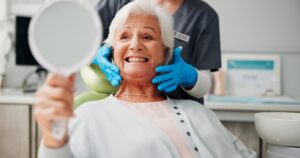

“Fast” at home is relative. No over-the-counter method rivals the speed of in-office whitening, but some approaches genuinely work faster and more reliably than others.
Can You Really Whiten Teeth Fast at Home?
Most at-home methods work gradually rather than instantly, since the whitening agents available without a dentist are weaker than what’s used in-office. That said, some products move faster than others, and knowing the difference saves time and money on approaches that won’t get you there.
Foods That Help, Slowly
Crunchy produce like apples, carrots, and celery can help scrub away surface stains as you chew, and strawberries contain malic acid, which may help with mild discoloration. These effects are real but modest, and they build gradually rather than delivering a noticeable change after one meal.
Daily Oral Hygiene’s Role
Brushing and flossing consistently removes the surface stains and plaque buildup that dull your smile over time. It won’t change the underlying shade of your teeth, but it prevents new surface staining from piling on top of whatever whitening progress you make.
What Whitening Toothpaste Actually Does
Whitening toothpaste uses mild abrasives and chemical agents to lift surface stains with regular brushing. It’s one of the easiest habits to adopt since it fits into a routine you’re already doing, though it works on surface stains rather than deeper discoloration.
Lifestyle Habits Working Against You
Coffee, tea, red wine, and tobacco are common culprits behind new staining, and continuing those habits while trying to whiten is working against yourself. Cutting back, or at least rinsing with water after exposure, helps whatever whitening method you’re using actually hold.
Preventing New Stains
Limiting exposure to staining foods and drinks, and rinsing soon after you do have them, helps preserve whatever results you’ve achieved rather than letting new stains undo the progress.
How Whitening Strips Work
Whitening strips are thin, flexible strips coated with a hydrogen peroxide or carbamide peroxide gel, worn directly against the teeth for a set period each day. Of the at-home options, strips tend to produce more noticeable results in a shorter timeframe than toothpaste or natural remedies, since the peroxide concentration is higher.
Whitening Gels Explained
Whitening gels are applied directly to the teeth, often with a tray or brush-on applicator, and work by breaking down surface stains with a similar peroxide-based approach to strips.
Do Whitening Mouthwashes and Rinses Help?
Some mouthwashes and rinses contain mild whitening ingredients, but because contact time with the teeth is brief, results tend to be the slowest and least noticeable of the at-home options covered here.
Home Methods vs. Professional Whitening
At-home products use lower concentrations of whitening agent for safety, which is exactly why they take longer and produce more modest results than professional teeth whitening performed under a dentist’s supervision. In-office treatment can brighten teeth by several shades in a single visit rather than requiring weeks of daily application.
When to See a Dentist Instead
If you want noticeable results before a specific event, or if you’ve tried at-home methods without the change you’re after, it’s worth finding out what professional whitening actually costs compared to the time and money spent on over-the-counter products. Patients with sensitive teeth in particular may get a more comfortable, controlled result from an in-office approach.
Ready for a Brighter Smile?
Schedule a consultation with Eggleston Dental Care in Turlock, CA to find out which whitening approach, at-home or in-office, fits your teeth and your timeline.